
Modified Starch Market-Rising Costs of Raw Materials

Modified Starch Market report categorizes the global market by Function, Raw Material (Cassava, Potato, Corn, and Wheat), Application [F&B (Bakery & Confectionery, Beverages, and Processed Foods), Animal Feed, and Industrial], and Region. The market for modified starch stood at USD 9.93 Billion in 2017; it is projected to grow at a CAGR of 4.1% from 2018, to reach USD 12.67 Billion by 2023. The base year considered for the study is 2017, and the forecast period is from 2018 to 2023. The basic objective of the report is to define, segment, and project the global market size for modified starch on the basis of modification type, raw material, function, application, and region. It also helps to understand the structure of the modified starch market by identifying its various segments. The other objectives include analyzing the opportunities in the market for stakeholders and providing a competitive landscape of market trends, analyzing the macro and micro indicators of this market, and projecting the size of the modified starch market and its submarkets, in terms of value as well as volume.

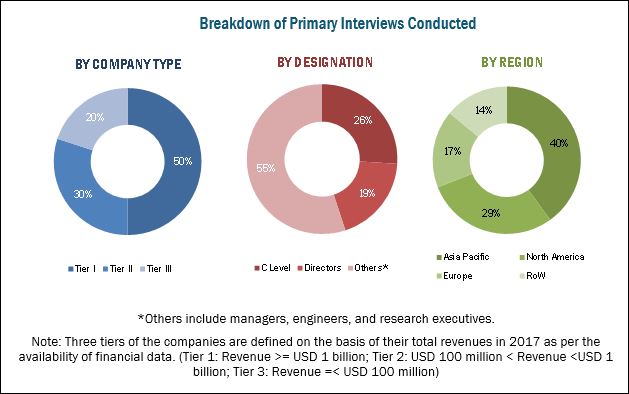
This report includes estimations of the market size in terms of value (USD million) and volume (million tons). Both, the top-down and bottom-up approaches have been used to estimate and validate the size of the global modified starch market and to estimate the size of various other dependent submarkets in the overall market. The key players in the market have been identified through secondary research; some of these sources are press releases, paid databases such as Factiva and Bloomberg, annual reports, and financial journals; their market shares in respective regions have also been determined through primary and secondary research. All percentage shares, splits, and breakdowns have been determined using secondary sources and verified through primary sources. The figure below shows the breakdown of profiles of industry experts that participated in the primary discussions.
Tartaric Acid Market- Less Availability of Raw Materials Results in Higher Production Costs

The tartaric acid market was valued at USD 204.0 million in 2016; it is projected to grow at a CAGR of 5.7%, to reach USD 285.6 million by 2022. The basic objective of the report is to define, segment, and project the global market size for tartaric acid on the basis of application, source, type, and region. Other objectives include analyzing the opportunities in the market for stakeholders, providing a competitive landscape of market trends, analyzing the macro and microeconomic indicators of this market to provide factor analysis and to project the growth rate of the tartaric acid market. The base year considered for the study is 2016, while the forecast period considered is from 2017 to 2022.  

This report includes estimations of the market size in terms of value (USD million). Both the top-down and bottom-up approaches have been used to estimate and validate the size of the global tartaric acid market and to estimate the size of various other dependent submarkets. The key players in the market have been identified through secondary research. Sources include press releases; paid databases such as Factiva and Bloomberg; annual reports; and financial journals. Their market shares in respective regions have also been determined through primary and secondary research. All percentage shares, splits, and breakdowns have been determined using secondary sources and were verified through primary sources. The figure below shows the breakdown of the profiles of the industry experts that participated in the primary discussions.

The key players that are profiled in the report include Caviro Group (Italy), ATP Group (US), Merck (Germany), Omkar Specialty Chemicals (India), Changmao Biochemical Engineering (China), Tarac Technologies (Australia), PAHI (Spain), Distillerie Mazzari (Italy), Distillerie Bonollo (Italy), Derivados Vinicos (Argentina), Industrias Vinicas (US), and Tártaros Gonzalo Castelló (Spain).

This report is targeted at the existing players in the industry, which include the following:

  • Food & beverage regulatory organizations
  • Tartaric acid manufacturers, suppliers, distributors, and retailers
  • Food & beverage product manufacturers, suppliers, distributors, and retailers

Improved Quality and Properties of Soil Stabilization Additives

The global soil stabilization market was valued at USD 21.14 Billion in 2016; this is projected to grow at a CAGR of 4.70% from 2017, to reach USD 27.80 Billion by 2022. The objectives of the report are to define, segment, and estimate the size of the global soil stabilization market, in both quantitative and qualitative terms. Furthermore, the market has been segmented on the basis of method, additive, application and region. The report also aims to provide detailed information about the crucial factors influencing the growth of the market, strategical analysis of micro markets, opportunities for stakeholders, details of the competitive landscape, and profiles of the key players, with respect to their market shares and competencies.

Research Methodology:

This research study involved the usage of extensive secondary sources (which include directories and databases)-such as Bloomberg Businessweek and Factiva-to identify and collect information useful for a technical, market-oriented, and commercial study of the soil stabilization market. The primary sources mainly included industry experts from core and related industries and preferred suppliers, dealers, manufacturers, equipment providers, technology developers, alliances, standards & certification organizations from companies and organizations related to all segments of this industry’s value chain. In-depth interviews were conducted with various primary respondents-including key industry participants, subject matter experts, C-level executives of key market players, and industry consultants-to obtain and verify critical qualitative and quantitative information as well as to assess future prospects. The following figure depicts the quantitative and qualitative frameworks used in drafting this research report.

Misconceptions Leading to Regulatory Compliance for Labelling Irradiated Food

The non-thermal processing market, was valued at USD 760.7 Million in 2016. It is projected to reach USD 1,224.2 Million by 2022, at a CAGR of 8.4% from 2017. Non-thermal processing technology is used to extend the shelf life of the food products and to enhance their appearance. Non-thermal processing technologies perform the function of food safety and preservation by inactivating the microbial cells. The growth of the packaged food industry and R&D activities are driving the market for non-thermal processing technologies. Market players are responding to new opportunities by expanding their global presence and product offerings.

The objectives of the study are:

  • To define, segment, and forecast the size of the non-thermal processing market with respect to food product, technology, function, and region
  • To analyze the market structure by identifying various sub segments of the non-thermal processing market
  • To forecast the size of the non-thermal processing market and its various submarkets with respect to four main regions, namely, North America, Asia Pacific, Europe, and the Rest of the World (RoW)
  • To provide detailed information about crucial factors that are influencing the growth of the market (drivers, restraints, opportunities, and challenges)
  • To analyze opportunities in the market for stakeholders and provide details of the competitive landscape for market leaders
  • To strategically profile key players and comprehensively analyze their market ranking and core competencies
  • To analyze competitive developments such as expansions, new product & technology launches, acquisitions, agreements, collaborations, and partnerships in the non-thermal processing market

Specialty Fats & Oils Market -Attractive Opportunities in the Specialty Oils Market

The specialty fats market was valued at USD 1.96 Billion in 2016 and is projected to reach USD 3.66 Billion by 2023, growing at a CAGR of 9.4%. The specialty oils market was valued at USD 13.83 Billion in 2016 and is projected to reach USD 21.19 Billion by 2023, growing at a CAGR of 6.3%. The base year considered for the study is 2016 while the forecast period is from 2017 to 2023. The basic objective of the report is to define, segment, and project the global market size for specialty fats & oils on the basis of type, form, application, and region. It also helps to understand the structure of the specialty fats & oils market by identifying its various segments. The other objectives include analyzing the opportunities in the market for the stakeholders and providing a competitive landscape of market trends, analyzing the macro and microindicators of this market to provide factor analysis, and to project the size of the specialty fats & oils market.

This report includes estimations of the market size in terms of value (USD million). Both, top-down and bottom-up approaches have been used to estimate and validate the size of the global specialty fats & oils market and to estimate the size of various other dependent submarkets in the overall market. The key players in the market have been identified through secondary research; some of the sources are press releases, paid databases such as Factiva and Bloomberg, annual reports, and financial journals; their market shares in respective regions have also been determined through primary and secondary research. All percentage shares, splits, and breakdowns have been determined using secondary sources and were verified through primary sources. The figure below shows the breakdown of profiles of industry experts that participated in the primary discussions.

Possible Side-Effects of Microbial Lipases and Lack of Awareness About Their Benefits

The microbial lipase market was valued at USD 400.6 Million in 2017 and is projected to reach USD 590.2 Million by 2023, growing at a CAGR of 6.8% from 2018, in terms of value. The objectives of this study are to define, segment, and project the size of the microbial lipase market based on application, form, source, and key regions.

This report includes the estimation of the market size for value (USD million) and volume (metric tons). Both, top-down and bottom-up approaches have been used to estimate and validate the size of the microbial lipase market and to estimate the size of various other dependent submarkets in the overall market. Key players in the market have been identified through secondary research (FAO, Bloomberg Businessweek, Factiva, and companies’ annual reports), and their market shares have been determined through primary and secondary research. All percentage shares, splits, and breakdowns have been determined using secondary sources and verified through primary sources.

Market Ecosystem

The various contributors involved in the value chain of microbial lipases include manufacturers, suppliers, distributors, intermediaries, and customers. The key players in the microbial lipase market include Novozymes (Denmark), DSM (Netherlands), Chr. Hansen (Denmark), Amano Enzymes (Japan), Associated British Foods (UK), DowDuPont (US), Advanced Enzymes (India), Enzyme Development Corporation (US), Aumgene Biosciences (India), Biocatalysts (UK), Meito Sangyo Co., Ltd (Japan), and Creative Enzymes (US).

Target Audience

  • Raw material suppliers
  • Enzyme manufacturers and suppliers
  • Regulatory bodies, including government agencies and NGOs
  • Commercial research & development (R&D) institutions
  • Importers and exporters of microbial lipases
  • Microbial lipase traders, distributors, and suppliers
  • Government organizations, research organizations, and consulting firms
  • Trade associations and industry bodies
  • End-use industries

Modified Starch Market-US Dollar Exchange Rate Considered for Study

Modified Starch Market report categorizes the global market by Function, Raw Material (Cassava, Potato, Corn, and Wheat), Application [F&B (Bakery & Confectionery, Beverages, and Processed Foods), Animal Feed, and Industrial], and Region. The market for modified starch stood at USD 9.93 Billion in 2017; it is projected to grow at a CAGR of 4.1% from 2018, to reach USD 12.67 Billion by 2023. The base year considered for the study is 2017, and the forecast period is from 2018 to 2023. The basic objective of the report is to define, segment, and project the global market size for modified starch on the basis of modification type, raw material, function, application, and region. It also helps to understand the structure of the modified starch market by identifying its various segments. The other objectives include analyzing the opportunities in the market for stakeholders and providing a competitive landscape of market trends, analyzing the macro and micro indicators of this market, and projecting the size of the modified starch market and its submarkets, in terms of value as well as volume.

This report includes estimations of the market size in terms of value (USD million) and volume (million tons). Both, the top-down and bottom-up approaches have been used to estimate and validate the size of the global modified starch market and to estimate the size of various other dependent submarkets in the overall market. The key players in the market have been identified through secondary research; some of these sources are press releases, paid databases such as Factiva and Bloomberg, annual reports, and financial journals; their market shares in respective regions have also been determined through primary and secondary research. All percentage shares, splits, and breakdowns have been determined using secondary sources and verified through primary sources. The figure below shows the breakdown of profiles of industry experts that participated in the primary discussions.

The key participants in the supply chain of the modified starch are the product manufacturers, end-use industries, and raw material suppliers. The key players that are profiled in the report include Cargill (US), Ingredion Incorporated (US), Archer Daniels Midland Company (US), Tate & Lyle Plc. (UK), and Avebe U. A. (Netherlands).

Distillers’ Grains Market -Poultry to Be the Fastest-Growing Segment During the Forecast Period

The distillers’ grains market was valued at USD 7.97 Billion in 2017; this is projected to reach 14.95 Billion by 2023, at a CAGR of 6.8% during the forecast period. Distillers’ grains being used as a favorable alternative to traditional feedstock and growth of the organized livestock sector are the factors driving this market.

The periodization considered for the study is as follows:

  • Base year: 2017
  • Forecast period: 2018 to 2023

The objectives of the report

  • Determining and projecting the size of the distillers’ grains market with respect to type, source, livestock, and regional markets, over a five-year period ranging from 2018 to 2023
  • Identifying attractive opportunities in the market by determining the largest and fastest-growing segments across regions
  • Analyzing the segments and subsegments of the global market for distillers’ grains included in the report with respect to individual growth trends, future prospects, and their contribution to the global market
  • Identifying and profiling the key players in the distillers’ grains market
  • Determining the market ranking of key players operating in the market for distillers’ grains.
  • Providing a comparative analysis of the market leaders on the basis of the following:
    • Product offerings
    • Business strategies
    • Strengths and weaknesses
    • Key financials
  • Understanding the competitive landscape and identifying the major growth strategies adopted by players across key regions
  • Analyzing the market dynamics and competitive situations & trends across regions and their impact on prominent market players

Research Methodology:

  • The key regions were identified, along with countries contributing the maximum share
  • Secondary research was conducted to find the value of distillers’ grains for regions such as North America, Europe, Asia Pacific, and RoW
  • The key players were identified through secondary sources such as the Food and Agriculture Organization (FAO), the US Department of Agriculture (USDA), International Monetary Fund (IMF), World Bank, and Organisation for Economic Co-operation and Development (OECD), while their market share in respective regions were determined through both, primary and secondary research processes. The research methodology included the study of annual and financial reports of top market players, as well as interviews with industry experts (such as CEOs, VPs, directors, and marketing executives) for key insights (both quantitative and qualitative) for the distillers’ grains market. The various contributors involved in the value chain of the distillers’ grains market include raw material suppliers, R&D institutes, distillers’ grain manufacturing companies [such as ADM (US), Valero (US), Green Plains Inc. (US), Pacific Ethanol, Inc. (US)], distillers’ grain distributors, livestock producers, feed manufacturers, and government bodies & regulatory associations [such as the US Department of Agriculture (USDA), the Food and Drug Administration (FDA), and the European Food Safety Authority (EFSA)].

Slaughterhouse Upgradation With Advanced Slaughtering Equipment

The global slaughtering equipment market was valued at USD 6.39 Billion in 2017; this is projected to grow at a CAGR of 4.56% from 2018, to reach USD 8.28 Billion by 2023. The objectives of the report are to define, segment, and estimate the size of the global slaughtering equipment market, in both quantitative and qualitative terms. Furthermore, the market has been segmented on the basis of type, process type, automation, livestock, and region. The report also aims to provide detailed information about the crucial factors influencing the growth of the market, strategical analysis of micro markets, opportunities for stakeholders, details of the competitive landscape, and profiles of the key players, with respect to their market shares and competencies.

This research study involved the extensive use of secondary sources (which included directories and databases) such as Hoovers, Forbes, Bloomberg Businessweek, and Factiva to identify and collect information useful for this technical, market-oriented, and commercial study of the slaughtering equipment market. The primary sources that have been involved include industry experts from the core and related industries and preferred suppliers, dealers, manufacturers, alliances, standards & certification organizations from companies, and organizations related to all the segments of this industry’s value chain. In-depth interviews have been conducted with various primary respondents, such as key industry participants, subject matter experts, C-level executives of key market players, and industry consultants, to obtain and verify critical qualitative and quantitative information as well as to assess future prospects. The following figure depicts the market research methodology applied in drafting this report on the slaughtering equipment market.

The key manufacturers in the slaughtering equipment market include Marel (Iceland), BADDER Group (Denmark), BAYLE SA (France), Prime Equipment Group (US), and CTB (US). These companies have diversified product portfolios and advanced technologies for slaughtering equipment at major strategic locations. The other companies which are profiled include Brower Equipment (US), Jarvis Equipment (India), Industries Riopel (Canada), ASENA (Azerbaijan), Dhopeshwar Engineering Private Limited (India), Meatek Food Machineries (India), BANSS (Germany), Limos (Slovenia), Best & Donovan (US), and Blasau (Spain).

The stakeholders for slaughtering equipment market are mentioned below:

  • Raw material suppliers
  • Traders and distributors of feed processing equipment
  • Feed processing equipment manufacturers
  • Regulatory bodies
  • Intermediary suppliers
  • Feed manufacturers
  • Trade associations and industry bodies
  • Government and research organizations

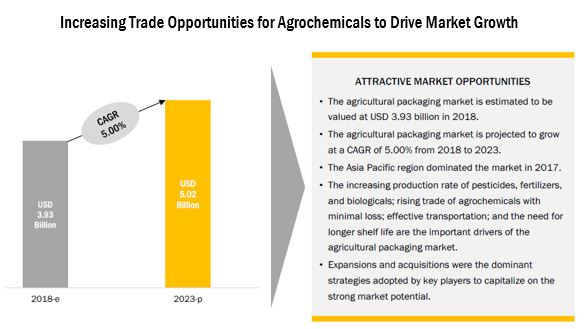
Increased Focus on Developing Efficient and Environment-Friendly Packaging

The agricultural packaging market was valued at USD 3.74 Billion in 2017, and is projected to reach USD 5.02 Billion by 2023, at a CAGR of 5.00% during the forecast period.

The years considered for the study are as follows:

  • Base year – 2017
  • Estimated year – 2018
  • Projected year – 2023
  • Forecast period – 2018 to 2023
Agricultural Packaging Market

For More details on this research, Request Free Sample Report

The objectives of the report

  • Determining and projecting the size of the agricultural packaging market, with respect to material, product, application, barrier strength, and regional markets, over a five-year period ranging from 2018 to 2023.
  • Identifying attractive opportunities in the market by determining the largest and fastest-growing segments across regions.
  • Analyzing the demand-side factors based on the impact of macro and microeconomic factors on the market and shifts in demand patterns across different subsegments and regions.

Research Methodology:

  • Major regions were identified, along with countries contributing the maximum share
  • Secondary research was conducted to obtain the value of agricultural packaging market for regions such as North America, Europe, Asia Pacific, South America, and RoW
  • The key players have been identified through secondary sources such as the Bloomberg, Businessweek, Factiva, agricultural magazines, and companies’ annual reports while their market share in the respective regions has been determined through both primary and secondary research. The research methodology includes the study of annual and financial reports of top market players, as well as interviews with industry experts (such as CEOs, VPs, directors, and marketing executives) for key insights (both quantitative and qualitative) for the agricultural packaging market.
Agricultural Packaging Market

To know about the assumptions considered for the study, download the pdf brochure

The various contributors involved in the value chain of the agricultural packaging market include raw material suppliers, R&D institutes, agricultural packaging manufacturing companies such as Amcor Limited (Australia), Bemis Company, Inc. (US), Greif, Inc. (US), Sonoco Products Company (US), and Mondi Group (South Africa), agrochemical manufacturers, and government bodies & regulatory associations such as the US Department of Agriculture (USDA) and Food and Agricultural Organization (FAO).

Target Audience

The stakeholders for the report are as follows:

  • Key manufacturers of pesticides, fertilizers, and other crop inputs
  • Key companies in the agricultural biologicals market
  • Traders, distributors, and suppliers in the agricultural pesticides market
  • Key packaging manufacturers for the agricultural industry
  • Traders and suppliers of raw materials to the packaging industry
  • Concerned government authorities, commercial R&D institutions, and other regulatory bodies